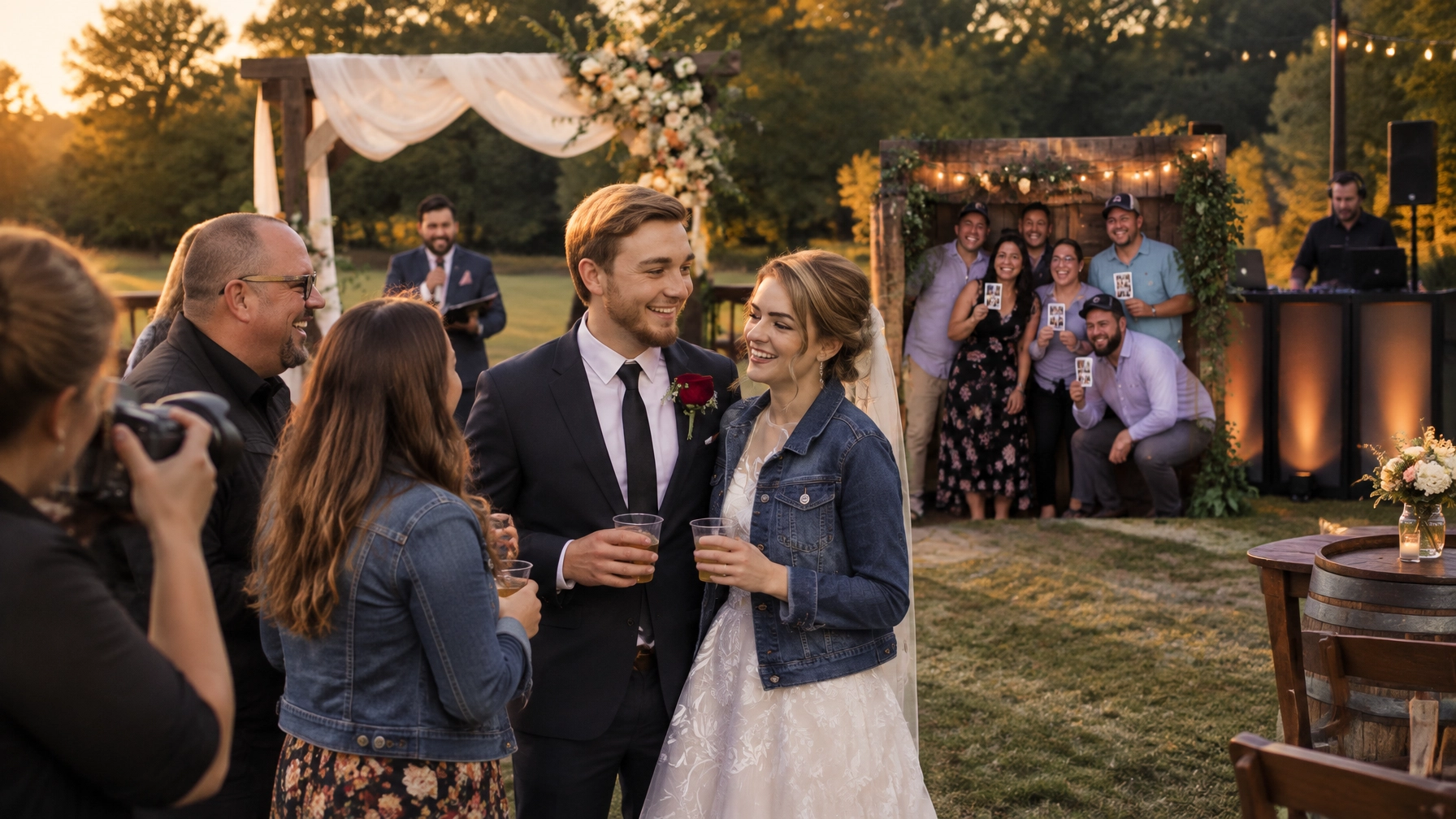
A great celebration does not happen because every detail runs on its own. It works because the right pieces happen in the right order.
After years of working events week after week, we have learned that the smoothest celebrations follow a practical rotation:
- Photography preserves the moments.
- The officiant gives the ceremony meaning and direction.
- The photo booth adds instant guest fun and keepsakes.
- The DJ carries the energy, announcements, and reception flow.
This order is not a rigid formula. Every event has its own timing, traditions, and venue layout. But it gives you a realistic starting point for building a celebration that feels organized without feeling overproduced.
The biggest advantage is accountability. When one trusted team understands the full event instead of four separate vendors working in isolation, communication gets easier. Transitions become cleaner. You spend less time answering the same question multiple times.
Here is how to plan around each part.
How to Start With Photography That Captures What Lasts
Photography comes first in the rotation because the images outlast the event itself.
The music will end. The meal will be served. Guests will eventually head home. Your photographs will continue telling the story years later. That makes photography more than a schedule item. It is the record of the people, details, and emotions that made the day matter.
For a wedding, that may include getting-ready moments, a first look, family portraits, the ceremony, candid guest interactions, and the reception. For an engagement session, it may be relaxed portraits that show your relationship without a formal event happening around you.
The same principle applies to other milestones. Senior portraits mark a major transition. Family photography preserves the relationships that change as children grow. Kids’ celebrations often produce the funniest and most genuine images because children rarely follow a script.
Build a practical photography timeline
Start by deciding what you want documented. Then work backward from the ceremony, main program, or event start time.
A realistic photography plan should include:
- Photographer arrival and setup
- Detail photos before guests arrive
- Getting-ready or preparation coverage
- First-look or pre-event portraits, if desired
- Family and group photographs
- Ceremony and guest reactions
- Couple, honoree, or family portraits
- Reception entrances, toasts, dances, and candid moments
- A final set of planned photographs before the event ends
Do not schedule portraits right up against the ceremony or reception entrance. Build in a real buffer. Someone will need a touch-up, a family member will be in the wrong room, or a group photo will take longer than expected.
Choose one person who can help gather family and wedding-party members. The photographer should be focused on creating images, not tracking down every cousin, sibling, or friend.
You can explore Team Titus photography services for examples of how wedding, event, portrait, senior, family, and children’s photography can fit into different celebrations.
How to Plan an Officiant-Led Ceremony With Warmth and Confidence
Once the photography plan is clear, shape the ceremony around the people at its center.
The officiant does more than read a script. A strong officiant helps the ceremony feel personal, meaningful, and comfortable. They guide the couple or honorees through the important moments while helping guests understand what is happening next.
That guidance matters, especially when nerves are high. A confident ceremony leader keeps the pace steady, gives clear instructions, and knows how to adjust when real life interrupts the ideal plan.
Confirm the ceremony details early
Before the event, review:
- Ceremony length
- Processional and recessional order
- Readings, traditions, or special elements
- Vows and ring exchange
- Names and pronunciations
- Microphone and sound needs
- Where the officiant will stand
- Who is responsible for the marriage license or required paperwork
- What happens if weather changes the ceremony location
If you are planning a wedding, give the officiant enough time to understand your relationship and your preferred tone. A traditional ceremony, a religious ceremony, an interfaith ceremony, and a secular ceremony each need a different approach.
The ideal ceremony may happen outdoors beneath perfect weather. The realistic ceremony needs a backup location, a sound plan, and a clear processional route.
If weather, late arrivals, or a room change affects the schedule, the officiant should know who has authority to make the final call. That prevents several people from giving conflicting directions.
Review Team Titus officiant services when you are building a ceremony that should feel personal without becoming difficult to manage.
How to Use the Photo Booth for Guest Fun and Instant Keepsakes
The photo booth works best when it supports the celebration instead of competing with it.
Its unique benefit is immediate. Guests take home something tangible, and the experience gives them an easy way to participate. A printed photo strip can become a favor, a scrapbook addition, or a keepsake from the night.
The booth also creates a different type of image than professional event photography. Your photographer captures meaningful moments and polished portraits. The booth captures playful expressions, group energy, and the guests who may not spend much time in front of the professional camera.
Choose the right photo booth location
Place the booth where guests can see it, but do not block:
- The dance floor
- The ceremony sightline
- Food and beverage service
- Restrooms or exits
- Accessible pathways
- The photographer’s main working areas
A visible location near the reception activity usually works well. Leave enough space for a short line without creating a traffic jam.
Open the booth during cocktail hour if it is ready. This gives early guests something to do while portraits are underway. Then keep it quieter during dinner, speeches, and major dances. Reopen it after the formalities when guests are ready to relax and move around.
A simple announcement is enough. Tell guests where the booth is, whether prints and digital sharing are available, and when it will pause or reopen. Avoid interrupting a toast or a packed dance floor just to promote it.
Before the event, confirm power, lighting, backdrop space, props, printer supplies, and digital sharing. Give guests clear options if they do not want their images shared online.
See the Team Titus photo booth experience for details on instant prints, digital sharing, props, custom templates, and unlimited sessions.
How to Let the DJ Manage Music, Announcements, and Reception Flow
The DJ comes last in the rotation because the DJ connects everything that happens after the ceremony.
A professional DJ does not simply press play. The role includes music selection, announcements, microphone handoffs, introductions, timing cues, and reception flow management. When the evening needs to move from dinner to speeches, from speeches to dancing, or from a special dance to the next activity, the DJ helps guests understand that transition.
Give the DJ one clear run-of-show
Your DJ should have:
- Event start and end times
- Load-in and setup access
- Ceremony and reception locations
- Entrance order and name pronunciations
- Processional and recessional music
- Toast order and speaker names
- Special dances or traditions
- Meal timing
- Photo booth open and pause times
- Last song and venue hard-out
- The name of the person authorized to change the schedule
Keep one person in charge of final decisions. That may be a planner, coordinator, host, or designated family member. The DJ should not receive five different versions of the timeline from five different people.
Protect guest attention. During dinner, let people eat. During a toast, let them listen. During a special dance, let them watch. The photo booth, bar, and dance floor can all be active parts of the event, but they should not compete for attention at the same moment.
After the formalities, give the DJ enough uninterrupted time to build the party. Constantly stopping the music can make the reception feel disjointed. A steady dance set usually creates more energy than a series of short starts and stops.
The Team Titus DJ and entertainment service includes music, MC support, announcements, and the practical coordination that keeps the reception moving.
How One Trusted Team Makes the Rotation Easier
The rotation works best when every service understands the full plan.
Photography needs to know when the ceremony begins. The officiant needs to know where to stand and when the processional starts. The photo booth needs to open at a time that does not compete with dinner or formalities. The DJ needs to know when each transition is ready.
With separate vendors, you may have to repeat the same information several times. You may also become the person responsible for connecting every handoff.
With one trusted event team, the communication chain is simpler. The people involved can coordinate timing, setup, guest flow, and changes with a shared understanding of the day.
Print one final run-of-show. Include arrival times, locations, contacts, portrait lists, ceremony cues, meal timing, photo booth hours, speeches, special dances, and the weather backup. Send it to the key people before the event, then review it again shortly before the celebration.
That document does not need to control every minute. It needs to make the important moments clear.
Build Your Celebration Around What Actually Works
The ideal event timeline is neat on paper. The realistic timeline includes buffers, weather options, late guests, room changes, and a few unexpected interruptions.
Plan for those things instead of treating them as failures.
Start with photography. Shape a meaningful ceremony with the officiant. Place the photo booth where guests can enjoy it without creating traffic. Then let the DJ guide the reception with music, announcements, and steady transitions.
That is the Team Titus rotation: four connected services, one coordinated plan, and a celebration that feels easier to enjoy.
When you are ready to talk through your event timeline, contact Team Titus Events. We will help you build a practical plan around the people, moments, and memories that matter most.
Leave a Reply