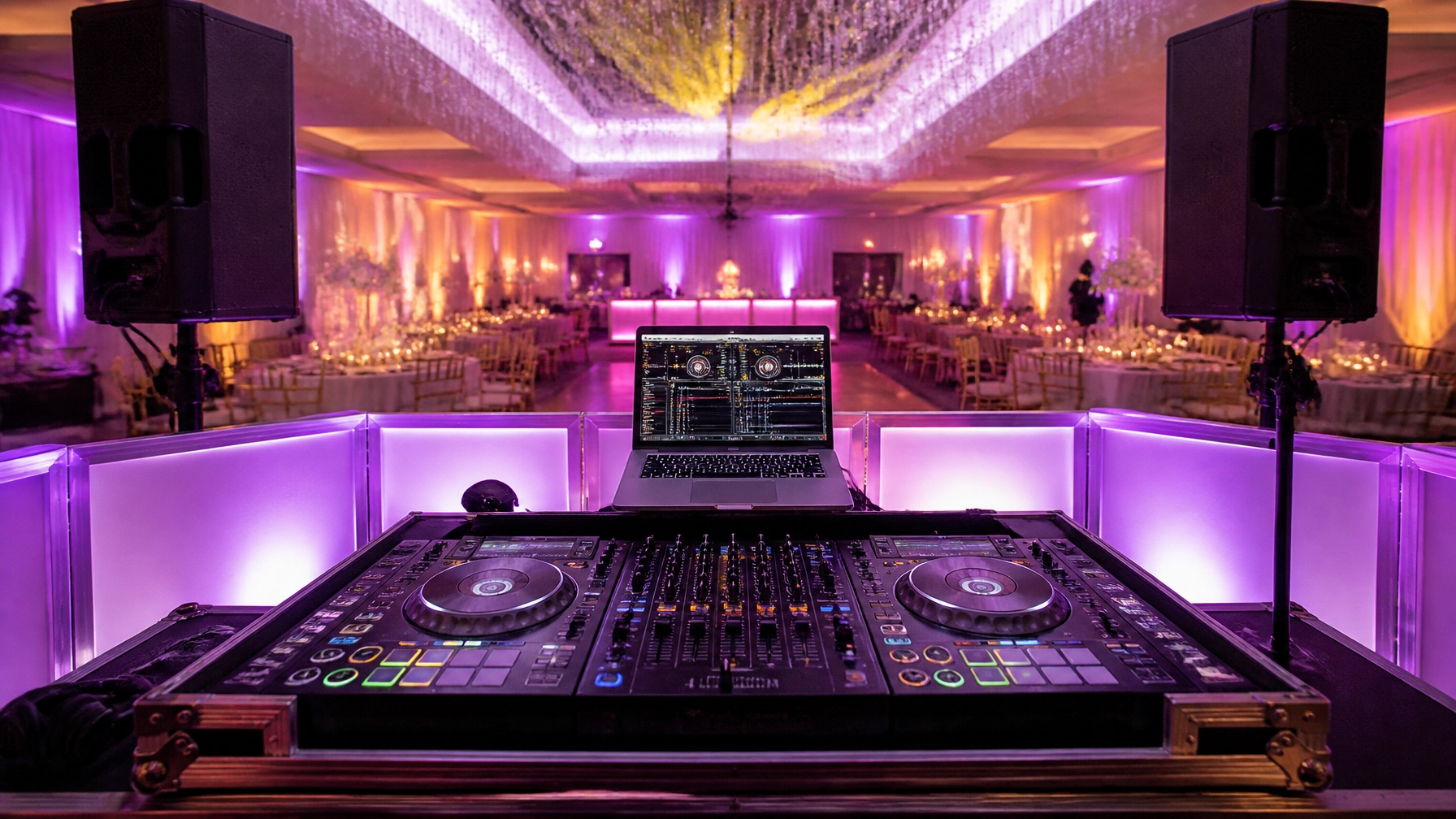
You have the dress, the venue is booked, and the catering tasting was a success. Now, it is time to think about the energy of the night. Most couples view their DJ as a "human jukebox": someone to show up, press play, and hope for the best. After nearly 40 years of being "in the trenches" at every type of celebration imaginable, we have seen that the difference between a legendary night and a flat reception usually comes down to a few critical, avoidable errors.
Planning a wedding is a high-stakes balancing act. You want a polished, professional atmosphere, but you also want a party that feels authentic and unscripted. Achieving that balance requires more than just a good playlist; it requires a flow manager.
Here are the seven most common mistakes couples make when booking and working with professional DJ services, and exactly how to fix your reception flow to ensure your guests are still talking about the night for years to come.
1. Falling Into the "Request Only" Trap
It is tempting to give your DJ a list of 100 "must-play" songs. You know your taste better than anyone, right? While having a vision is great, micromanaging the playlist is a guaranteed way to kill the energy.
A professional DJ’s primary job is to read the room. They watch the body language of your guests. If they see the older generation starting to head toward the exits, they might pivot to a classic Motown track to pull them back for one more dance. If you have locked the DJ into a rigid list of requests, they lose the ability to adapt.
The Fix: Provide a "Must Play" list of 10-15 tracks and a "Do Not Play" list that is as long as you want. Give your DJ the professional freedom to fill the gaps. Trust the experience of someone who has seen thousands of dance floors react in real-time.
2. Tucking the DJ Into a Dark Corner
Venue floor plans often treat the DJ like an afterthought, placing them in a far corner or behind a pillar. This is a massive mistake for your reception flow. Your DJ is the heartbeat of the event. They need a direct line of sight to the dance floor, the head table, and the bar.
If the DJ is tucked away, they cannot feel the energy of the crowd. They also cannot see when the catering staff is ready for the next course or when a toast is about to begin. Visibility equals connectivity.
The Fix: Place your DJ centrally, near the dance floor. This allows the MC to make eye contact with guests and maintain a "command center" view of the room. This ensures every announcement is timed perfectly with the actual movement of the event.
3. Hiring a "Playlist Maker" Instead of an MC
There is a massive difference between a club DJ and a wedding DJ. A club DJ focuses on the mix; a wedding DJ focuses on the flow. The MC (Master of Ceremonies) side of the job is what keeps your timeline moving.
Mistakes happen when a DJ is great at music but shy on the microphone. You need someone who can command a room of 200 people without being "cheesy" or overbearing. If your DJ doesn't know how to transition from a high-energy dance set into a cake-cutting announcement, the room will feel disjointed.
The Fix: Choose a professional DJ service that emphasizes MC training. Look for someone who uses clear, authoritative, yet warm announcements to guide guests from one "chapter" of the night to the next.
4. Neglecting the "Transition" Music
The most awkward moments at a reception usually happen during the transitions: moving from the ceremony to cocktail hour, or from dinner to the dance floor. Many couples focus only on the "big" songs (First Dance, Grand Entrance) and forget the 45 minutes of dinner music or the 60 minutes of cocktail hour.
If the music is too loud during dinner, guests can’t talk. If it’s too slow immediately after dinner, you lose the "hype" needed to open the dance floor.
The Fix: Work with your team to build a "vibe progression." Cocktail hour should be upbeat and social: think jazz or acoustic covers. Dinner should be lower volume and instrumental or mellow. As dessert is served, the tempo should gradually increase to signal that the party is about to start.
5. Over-Scripting the Timeline
We love a good timeline. In fact, we live by them. However, a realistic timeline needs "buffer zones." Many couples try to pack too many formalities into the first hour: Grand Entrance, Cake Cutting, First Dance, Toasts, Blessing, and Dinner: all within 45 minutes.
When things run five minutes late (and they always do), a scripted timeline starts to crumble. This creates stress for you and a sense of "rushing" for your guests.
The Fix: Build in 10-minute buffers. If the toasts go long, you won’t be stressed. If everything finishes early, your DJ can use that extra time to get the dancing started sooner. Proactive planning beats reactive stress every time.
6. Ignoring the Acoustic Reality of the Venue
Every room sounds different. A high-ceilinged barn with wooden walls reflects sound differently than a carpeted ballroom. A common mistake is not discussing the sound setup for different locations. If your DJ is only set up in the reception room but you need music for an outdoor cocktail hour, you’re going to have a "dead zone."
The Fix: Ensure your DJ provider has high-quality, professional-grade equipment and multiple setup options. Ask about their plan for different spaces within your venue. A truly trusted team handles these technical details so you don't have to worry about gear failure or poor sound quality.
7. Choosing Based on Price Rather Than Presence
We see it all the time: a couple tries to save a few hundred dollars by hiring a hobbyist DJ or a friend of a friend. On a day where you are spending thousands on food, decor, and photography, the DJ is the one person responsible for whether or not people actually enjoy themselves.
A "bargain" DJ often lacks backup equipment, professional liability insurance, and: most importantly: the experience to handle a crisis. If the power goes out or a laptop crashes, a professional has a backup ready in seconds. A hobbyist does not.
The Fix: View your DJ as an investment in your guests' experience. You aren't just paying for music; you are paying for an insurance policy against a boring, disorganized night.
Why the One-Stop Shop Works
Managing multiple vendors is one of the biggest stressors in event planning. When your photographer, DJ, and photo booth team are all from the same company, the flow is naturally better. Your DJ knows exactly where the photographer needs to be for the first dance and will wait for their signal. Your photographer knows the DJ’s lighting cues.
By choosing a one-stop shop, you remove the friction of coordination. You get a family-run team that has been doing this since 1985, ensuring that the people, the details, and the emotion of your day are handled with personal, accountable service.
Print this checklist and bring it to your next planning meeting. Don't just book a DJ( build a reception flow that works.)
Leave a Reply