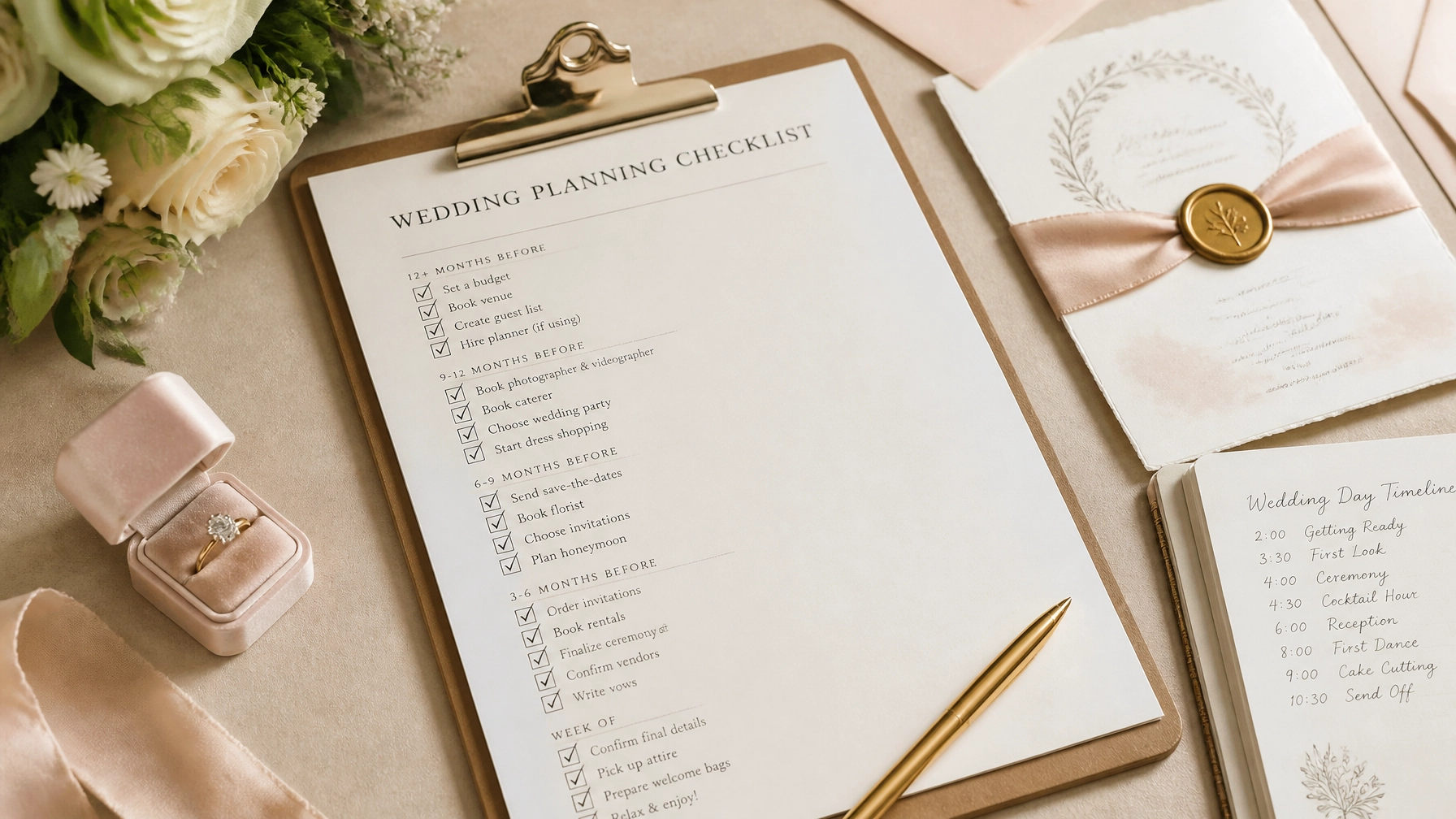
Planning a wedding in 2026 isn’t just about picking a date and a dress; it’s about engineering an experience that feels effortless for you and unforgettable for your guests. As a team that has been in the trenches of the event industry since 1985, we’ve seen the shift from stiff, overly-formal productions to the current demand for "polished authenticity."
Success in 2026 requires a mix of early strategic decisions and a commitment to a realistic timeline. Whether you are aiming for a classic celebration or a modern, high-energy party, this guide breaks down the essential elements you need to lock in to ensure your day runs without a hitch.
The 2026 Planning Mindset: Prioritizing Flow Over Formalities
The biggest trend we are seeing for 2026 is a move toward "calm timelines." Couples are no longer interested in the frantic sprint from the hair-and-makeup chair to the altar. Instead, the focus has shifted to creating buffers: 15 to 20-minute gaps where nothing is scheduled. These moments allow you to breathe, grab a glass of water, and actually process the fact that you’re getting married.
When you start your planning process, look at your day in blocks of "energy." Your ceremony is high emotional energy; cocktail hour is social energy; dinner is grounded energy; and the reception is high physical energy. A successful plan balances these so your guests don’t burn out before the cake is cut.
Securing Your Core Vendor Team
In the current market, the most successful events are those where the vendor team operates as a single, cohesive unit. This is why the "one-stop shop" model has become the gold standard. When your professional photography, DJ & entertainment, and officiant services are managed by one trusted team, the communication is seamless. There’s no friction between the photographer wanting one more sunset shot and the DJ needing to start the grand entrance.
Choosing Your Photographer
For 2026, the "documentary-style" approach is leading the way. Couples want images that capture the people, details, and raw emotion of the day rather than hours of stiff, posed portraits.
- The Realistic Approach: Do your family portraits before the ceremony. It feels counter-intuitive to some traditionalists, but finishing these early allows you to actually attend your cocktail hour.
- Pro Tip: Look for photographers who prioritize soft natural lighting and golden-hour captures. These "timeless" images age much better than those following fleeting editing trends.
The Role of the Modern DJ
A wedding DJ in 2026 is much more than a person playing a playlist; they are the "reception flow manager." They handle announcements, manage the energy of the room, and ensure the transition from dinner to dancing feels natural.
- The Best Practice: Don’t just provide a "must-play" list. Provide a "vibe description." A skilled DJ can read a room better than a static list ever could.
- Equipment Matters: Ensure your Michigan wedding DJ uses professional-grade sound and lighting that complements your venue’s aesthetic rather than distracting from it.
The Perfect Ceremony: Meaningful and Efficient
The ceremony is the heart of the day, but it’s often the part couples spend the least amount of time planning. In 2026, the best ceremonies are personal, meaningful, and: crucially: concise.
- The 30-Minute Rule: Unless you are having a full religious mass, aim to keep your ceremony between 20 and 30 minutes. This keeps guest engagement high and ensures the schedule stays on track.
- The Officiant: Choosing a professional officiant ensures that your vows are delivered with warmth and confidence. They handle the legalities, but more importantly, they set the tone for the entire evening.
Elevating the Guest Experience with Interactive Elements
While you are the stars of the show, the success of your wedding is often measured by how much fun your guests have. Interactive elements are no longer "extras"; they are essential components of a modern celebration.
- Photo Booths: A photo booth rental provides instant memories for your guests to take home. In 2026, we see a move toward sleek, open-air booths that fit seamlessly into the decor of the reception.
- Strategic Placement: Place your photo booth near the bar or just off the dance floor. If it’s in a separate room, half your guests won't realize it’s there.
- The "Room Reveal": Before guests are ushered into the reception space, take five minutes with your photographer for a private "room reveal." It’s your chance to see the decor you spent months planning before the crowd fills the space.
Building a Realistic 2026 Timeline
Here is a practical look at how a 4:00 PM ceremony should be structured for maximum success:
- 1:00 PM – Details Photography: Flat lays of invitations, rings, and the dress.
- 2:00 PM – First Look: A private moment for just the two of you. This is the best time for intimate portraits.
- 2:45 PM – Wedding Party & Family Photos: Get the "work" done while everyone is fresh and makeup is perfect.
- 3:30 PM – The "Hideaway": Retreat to a private room. This 30-minute buffer allows guests to arrive and gives you a moment to center yourself.
- 4:00 PM – Ceremony: Short, sweet, and meaningful.
- 4:30 PM – Cocktail Hour: Guests enjoy drinks and appetizers. If you did your photos earlier, you’re here enjoying this with them.
- 5:45 PM – Grand Entrance & Dinner: The DJ takes over to manage the flow of speeches and service.
- 7:30 PM – Golden Hour Portraits: 15 minutes of sunset photos.
- 8:00 PM – Dancing & Photo Booth: The party starts in earnest.
Weather Contingencies and "What-Ifs"
Even the best-laid plans need a "Plan B." Whether it's an unexpected rain shower or a technical glitch, the key to success is having a team that is accountable.
- Print Your Timeline: While everything is digital these days, have three physical copies of your timeline: one for you, one for the maid of honor, and one for the lead vendor.
- Choose Local Experience: Working with a family-run company that has served the area since 1985 means you are hiring people who know the local venues, the typical weather patterns, and how to handle last-minute adjustments without breaking a sweat.
Final Practical Reminders
As you move toward your 2026 wedding date, keep these three things in mind:
- Book the "Big Four" early: Photography, DJ, Venue, and Catering should be secured at least 12–18 months in advance.
- Focus on Quality over Quantity: It is better to have a phenomenal DJ and photographer than a dozen mediocre "extras."
- Trust Your Professionals: You are hiring experts so that you don't have to be one. On the day of the wedding, let go of the logistics and trust the team you’ve built.
For those planning their milestone event, remember that the most beautiful weddings aren't the ones with the biggest budgets: they're the ones where the couple is present, relaxed, and supported by a professional event team.

Leave a Reply