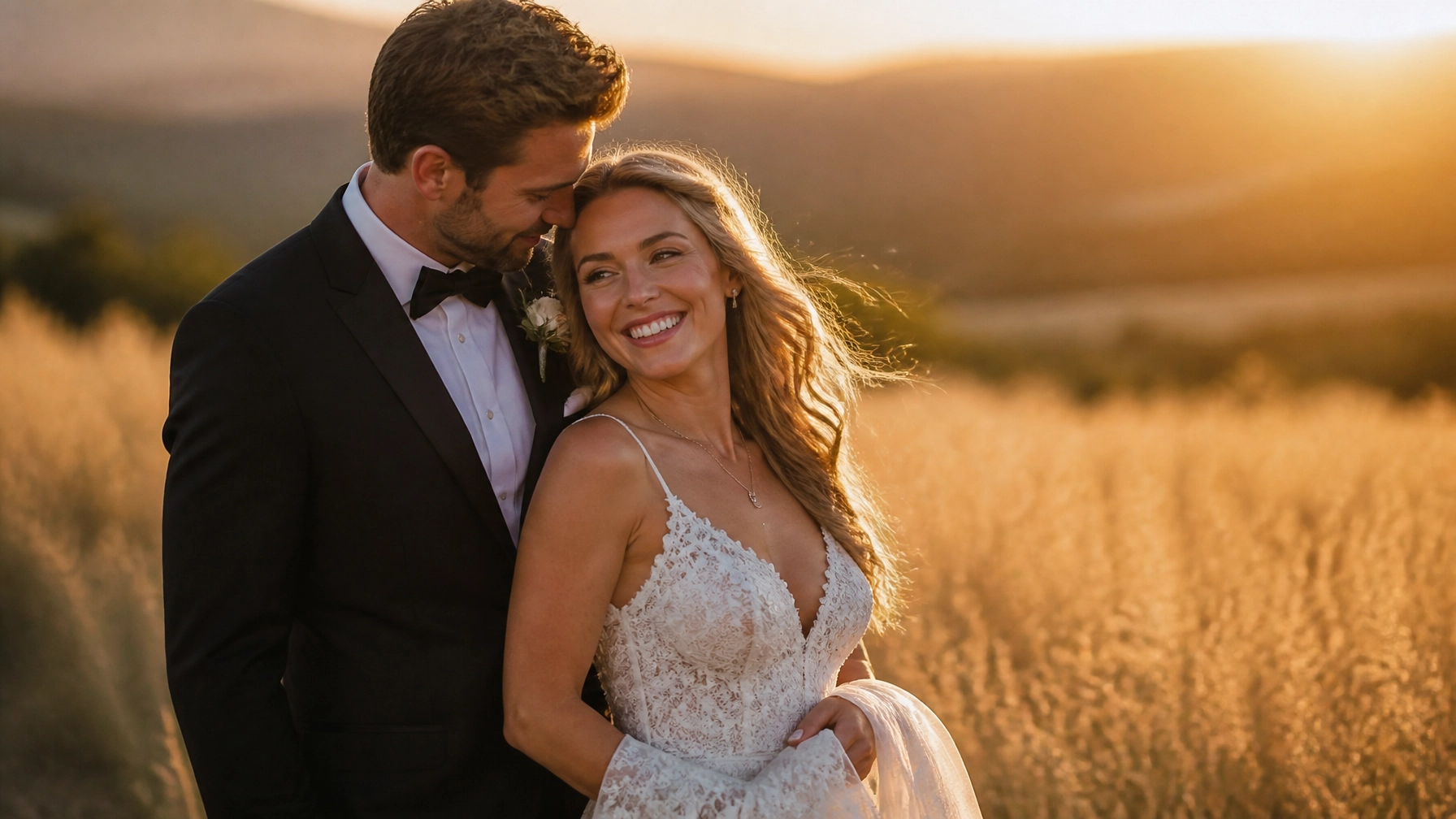
There is a specific, almost magnetic pull toward the idea of a sunset wedding.
We’ve all seen the photos: a couple bathed in a honey-colored glow, the sky painted in streaks of violet and gold, and a ceremony that feels like it was plucked straight from a cinematic masterpiece. As professionals who have spent nearly 40 years on the ground at events across the state, we can tell you that "Golden Hour" isn't just a lighting choice: it is a logistical marathon.
If you are currently deep in wedding planning Michigan style, you know that our weather and our light can be as unpredictable as a guest list. To pull off a sunset ceremony without losing your mind (or your light), you need more than a dream; you need a hard-coded, realistic timeline.
In the trenches of weekend weddings, we see the difference between couples who "hope" for the light and those who "plan" for it. Here is the reality of how to build a day that captures that magic while keeping your sanity intact.
The Math of the "Golden Hour"
First, let’s kill the mystery. "Golden Hour" is technically the last 60 minutes of light before the sun disappears behind the horizon. In a photography sense, it’s when the sun is low enough to stop creating harsh, "raccoon-eye" shadows and starts producing that soft, directional glow that makes everyone look like a movie star.
However, "sunset" in a weather app is the moment the sun is gone. If your ceremony starts at the time listed as sunset, you are getting married in the dark.
For a successful wedding photography packages Michigan experience, we always recommend working backward from the sunset. If the sun sets at 8:15 PM, your "Golden Hour" is 7:15 PM to 8:15 PM. This is your high-value real estate. You do not want to be stuck in the middle of a long-winded ceremony during this time; you want to be finished and out in a field with your photographer.
The Two Most Realistic Timeline Scenarios
When you sit down to build your day, you generally have two paths. Both work, but they require different levels of commitment to your schedule.
1. The Post-Ceremony Sprint (Most Popular)
In this scenario, you get married about 90 minutes to two hours before the sun actually sets. This allows you to finish the ceremony, sign the license, and spend the final 45 minutes of light doing your couple's portraits.
- The Advantage: Your guests get to enjoy a beautiful late-afternoon ceremony, and you get the absolute best light for your private photos.
- The Reality: You have to be disciplined. If your ceremony starts 15 minutes late or your officiant goes long, you are literally watching your "gold" turn into "gray."
2. The Sunset Vows (The Most Dramatic)
This is for the couple who wants the sun to actually drop during the "I dos."
- The Advantage: Incredibly romantic and memorable for guests.
- The Reality: You must do a "First Look." If you wait until after a sunset ceremony to take photos, you will have zero natural light left. All your formal portraits, family shots, and bridal party photos must be completed before the ceremony begins.
Why the "First Look" is Your Secret Weapon
We are often asked if a First Look takes away from the "aisle moment." Speaking from four decades of experience: it doesn't. What it does do is buy you insurance.
When you are planning a sunset-heavy timeline, the First Look allows us to knock out the majority of your photography needs while the sun is still high and bright. This frees up the transition between the ceremony and the reception. Instead of rushing through 50 family combinations while the sun is dying, you can slip away for 15 minutes of quiet, golden portraits and then head straight into your party.
Lighting Realities: It’s Not Just About the Sun
While we all want that direct, golden flare, a "realistic" plan accounts for the Michigan clouds. If it’s an overcast day, your "Golden Hour" essentially happens earlier and ends sooner. The light becomes very blue and flat once the sun is behind thick clouds.
As a full-service event company, we coordinate the DJ and entertainment alongside the photography. Why does this matter for your lighting? Because your DJ is the one managing the flow of the evening. If the clouds break and the light becomes perfect for five minutes, a professional team can pivot. We can shift the "grand entrance" by ten minutes to let you grab that perfect shot because we are one cohesive unit, not five separate vendors who aren't talking to each other.
Managing Guest Comfort at Sunset
A sunset ceremony often means the temperature will drop rapidly as soon as the sun dips. When you are looking at wedding planning Michigan options, especially for autumn weddings, you have to think about the "shiver factor."
- Provide Wraps: If you’re committed to an outdoor sunset ceremony, have a basket of blankets or wraps.
- Timing the Bar: If guests are sitting through a 20-minute ceremony as the sun sets, they’ll want a warm drink or a cocktail immediately following. Coordinate with your team to ensure the transition from "vows" to "vibe" is seamless.
- The Photo Booth Factor: While you are out chasing the light, your guests need something to do. A photo booth is the perfect bridge. It keeps the energy high and gives them a souvenir while you and your photographer are finishing up your session in the field.
The Golden Hour Sprint: A Practical Checklist
Print this. Put it in your planner. This is how you actually execute the vision:
- Identify "True Sunset": Use an app like SunCalc to see exactly where the sun will be at your venue on your specific date. Trees and buildings change "effective sunset" by 15–30 minutes.
- Finish Hair and Makeup Early: We recommend being 100% ready two hours before you think you need to be. This buffer is what allows for the "pre-ceremony" shots that save your timeline later.
- Choose the Right Direction: Ensure your ceremony site isn't pointing directly into the sun, or your guests (and your groom) will be squinting through the whole thing. Aim for "backlighting" where the sun is behind you or to the side.
- Trust Your Pro: If your photographer says, "We need to go NOW," put down the champagne and go. The light waits for no one.
Why a One-Stop Shop Matters for Timing
One of the biggest "timeline killers" is a lack of communication between vendors. The photographer wants the couple in the field, but the DJ is ready for the cake cutting, and the officiant is still looking for the marriage license.
When you work with a team that handles all-in-one services, we operate from a single master clock. Our photographers and DJs have worked together for years. We know exactly how much time is needed for the "golden hour sprint" and how to keep the guests entertained so you don't feel rushed. We aren't just taking pictures or playing music; we are managing the atmosphere of your day.
Final Thoughts: Ideal vs. Realistic
The "ideal" is a cloudless, 72-degree evening with a slow, purple sunset. The "realistic" is a slightly breezy afternoon where we have to hustle to catch the light between the clouds. Both result in stunning images if the foundation of your timeline is solid.
Don't just plan for the "magic": plan for the logistics that allow the magic to happen. When you prioritize the timing of your ceremony based on the light, you aren't just getting better photos; you're creating a better experience for everyone involved.
Ready to start building your perfect Michigan wedding timeline? Whether you need a team that handles the music, the photos, or the whole celebration, we’ve been here since 1985 making sure the "Golden Hour" is everything you dreamed it would be.
hero_image: https://cdn.marblism.com/9t7bfs6I76A.webp

Leave a Reply