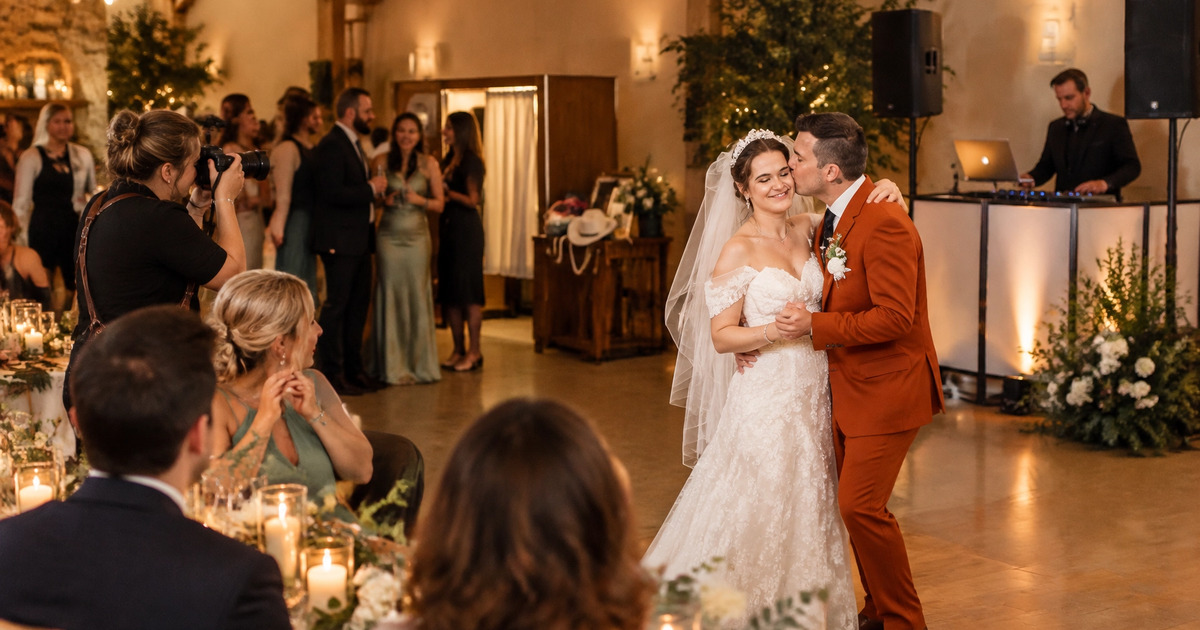
A well-run celebration doesn’t feel like a schedule. Guests aren’t watching a clock, and the couple isn’t wondering who is supposed to take over next. The day simply keeps moving.
That ease comes from giving each part of the celebration a clear lead: photography preserves the early moments, the officiant guides the ceremony, the photo booth gives guests an easy way to join in, and the DJ manages the reception’s sound and flow.
Here’s a realistic wedding-day rotation built around a 4:00 p.m. ceremony and a 6:00 p.m. dinner. Your event may start earlier or later, but the handoffs, and the buffers that protect them, work just as well for other celebrations.
How to Start the Day With Photography
10:00 a.m.–3:15 p.m. | Preparation, portraits, and a protected pause
Photography often leads the day because so many important moments happen before guests arrive. Build the schedule backward from the ceremony, then give preparation and portraits enough room to happen without rushing.
A practical morning might look like this:
- 10:00–10:30 a.m.: Photograph the room, attire, flowers, rings, and other details.
- 10:30 a.m.–1:30 p.m.: Cover final preparations, candid interactions, and getting-ready moments.
- 1:30–2:15: Allow time to get dressed and take a few quiet portraits.
- 2:15–3:15: Photograph the couple, wedding party, and immediate family.
- 3:15–4:00: Protect a buffer for touch-ups, late arrivals, travel between nearby spaces, or simply a chance to breathe.
The ideal plan may put every portrait in perfect light and every person exactly where they need to be. The realistic plan includes a few extra minutes for a missing boutonniere, a dress adjustment, or relatives who need help finding the portrait spot. Print a short family-photo list and ask one organized person to help gather people. That small step keeps portraits focused and gets everyone back to the celebration sooner.
Photography does more than document how the room looked. It preserves the people, details, and emotion that make a day worth remembering after it has passed. The same thoughtful approach can suit engagements, senior portraits, family sessions, and kids’ celebrations, too. See the range of photography sessions and event coverage.
The handoff: Photography can continue during the ceremony and reception, but its early-day lead is preparation and portraits. Before the processional, confirm where the photographer will stand, which family groups are still needed, and when the couple should be ready for the ceremony.
How to Give the Officiant a Clear Ceremony Window
3:30–4:30 p.m. | Final check, ceremony, and a clean recessional
If the ceremony begins at 4:00, aim to have the wedding party ready and in position by about 3:30. That half hour is useful, not wasted time. It gives the officiant a chance to confirm the processional order, check the microphone, review any readings, and make sure the paperwork is accounted for.
A ceremony may be brief or more detailed, but its length should be intentional. Talk through the order of events in advance: who walks in when, where people stand, who will read, how the vows will work, and what happens immediately after the couple is pronounced married. Ask who is holding the paperwork and where it will go afterward. Those practical questions are easier to settle before guests are seated.
For microphones, decide who needs one and test it from the back of the room. A microphone that sounds clear near the couple may be difficult to hear farther away. If there is no sound system, discuss that early so the ceremony can be planned accordingly.
The ideal ceremony runs exactly to the minute. The realistic one leaves a few minutes for guests to settle and for the wedding party to line up without pressure. A warm, confident officiant helps guests follow what’s happening while keeping the moment personal. For ideas about ceremony guidance, visit the officiant services page.
The handoff: After the recessional, give the couple a moment to greet guests or move into any remaining portraits. Meanwhile, guests can head toward cocktail hour. The next activity should be easy to find and ready before people start looking for something to do.
How to Open the Photo Booth During Cocktail Hour
4:30–5:30 p.m. | A simple activity guests can join at their own pace
Cocktail hour is a natural first window for a photo booth. Guests have arrived, the couple may be finishing portraits, and people are looking for a relaxed way to mingle. A booth gives them a clear invitation: step in, take a picture, share a laugh, and keep moving.
The booth should be set up and tested before guests arrive. Choose a spot that’s easy to see but doesn’t block the bar, food service, or main path through the room. Make sure the line has somewhere to form without crossing a doorway. If there are props, keep them together and within reach.
The ideal booth experience has a steady line from the first minute. In practice, guest traffic comes in waves. Some people will be eager to take pictures during cocktail hour; others will wait until they see friends using it. Instant prints or digital sharing give guests a keepsake, and the relaxed, playful snapshots create a different kind of image from the professional gallery.
Keep the booth available for a second window after the formalities, often around 7:30–9:30 p.m., once dinner, toasts, and special dances are finished. Guests can come back between songs, and groups that weren’t ready to pose earlier get another chance. Learn more about photo booth options and guest features.
The handoff: Before dinner begins, make sure guests know where the booth will be later. Then shift attention toward the reception entrance and meal. A quick announcement or a visible sign can help guests understand what’s next without interrupting the evening.
How to Let the DJ Carry the Reception Flow
5:30 p.m. onward | Dinner announcements, toasts, dances, and open dancing
A DJ’s job is not just to play a playlist. The DJ helps guests know where to go and what is happening next, manages microphone handoffs, and keeps the reception moving without making it feel overproduced.
A practical sequence could be:
- 5:30–6:00: Welcome guests into the reception space and prepare for the couple’s entrance.
- 6:00–6:15: Make the entrance announcement and, if planned, begin special dances.
- 6:15–7:15: Support dinner service with appropriate background music and clear, brief announcements.
- 7:15–7:35: Introduce toasts and manage microphone handoffs.
- 7:35 onward: Make any remaining announcements, then invite guests onto the dance floor.
The exact timing depends on the meal. A buffet, plated dinner, and family-style service all move differently, so coordinate the schedule with whoever is managing food service. For toasts, share the speaker order in advance, identify who will hold the microphone next, and give speakers a helpful time expectation. The ideal plan has every speaker ready at once; the realistic plan allows a few minutes to locate someone or reset the room between moments.
Special dances can happen right after the entrance or after dinner. Choose the spot that fits the couple and the room. Then give guests a clear signal when formalities are over and open dancing begins. A confident emcee can make that transition feel natural. Explore what DJ and entertainment services can include beyond music, such as announcements and reception-flow support.
How to Make Each Handoff Easier With One Shared Plan
When several people are managing different parts of the day, coordination can become its own job. Separate calendars, contracts, arrival plans, and communication chains create more chances for details to get lost.
One trusted team handling multiple parts of a celebration can simplify that coordination: fewer schedules to compare, one point of contact, and a shared timeline that shows when each person leads and what the next handoff looks like. It can also make practical details easier to align, such as where equipment is set up, when a room needs to be clear, or who will make an announcement.
That doesn’t mean every moment needs to be tightly choreographed. It means everyone working the event has the same basic plan, and knows who to ask when something changes. A clean handoff protects the guest experience because guests can focus on the celebration instead of figuring out where to go or what comes next.
For the couple, the payoff is simple: fewer logistics to carry in your head. For guests, it’s a day that feels welcoming and easy to follow.
How to Build a Timeline That Works in Real Life
Start with the ceremony time, then add preparation, portraits, travel, and reception milestones. Leave a buffer before the ceremony and between major transitions. Share the finished timeline with the people responsible for each part, and confirm the final details a few days before the event.
Most importantly, treat the schedule as a guide, not a test. A realistic timeline leaves room for people to be people. When photography, the officiant, the photo booth, and the DJ each have a clear window and a clean handoff, the day can feel organized without feeling rigid.
If you’re planning a wedding or another milestone celebration, we’d love to help you map out the day. Reach out to Team Titus Events when you’re ready, and we’ll build a rotation that fits your people, your venue, and the moments you most want to keep.
Leave a Reply