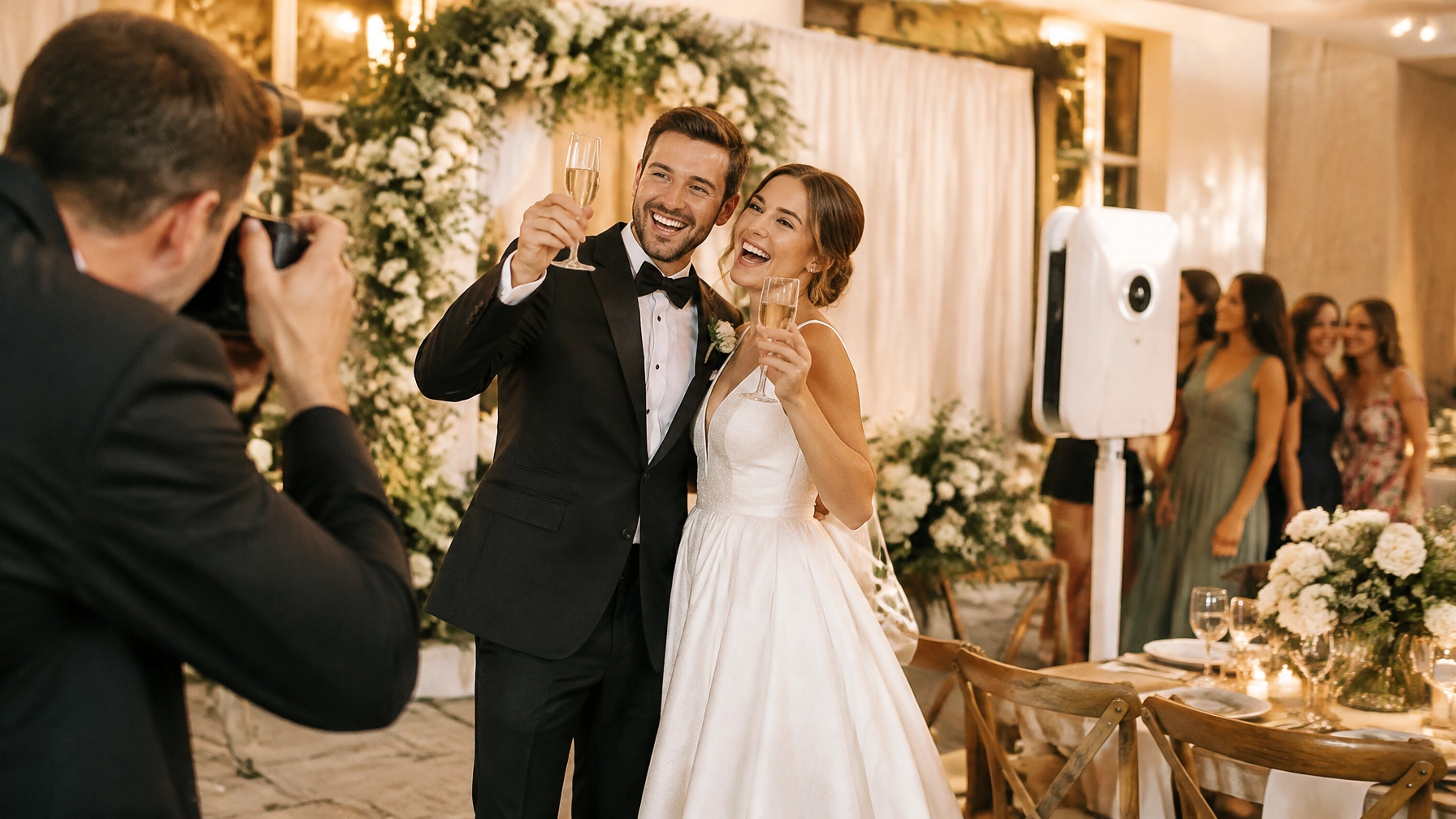
A seamless celebration does not happen by accident. It comes from clear priorities, a realistic timeline, and trusted professionals who understand how each part of the day affects the next.
After years of working events, we have seen the ideal plan and the realistic plan. The ideal plan runs perfectly on paper. The realistic plan includes guests who arrive early, family photos that take longer than expected, weather changes, and a few schedule adjustments. The difference is having a team that can adapt without making the celebration feel rushed.
Whether you are planning a wedding, graduation party, birthday, anniversary, corporate gathering, school event, or community celebration, four essentials help create a well-run experience:
- Photography
- Officiant services
- Photo booth entertainment
- DJ and event entertainment
When one trusted team can coordinate these services, planning becomes simpler. You spend less time managing separate vendors and more time making decisions that actually shape the guest experience.
Start With a Realistic Celebration Timeline
Before choosing details, build a basic timeline around the moments that matter most.
For a wedding, that may include preparation, the ceremony, family portraits, dinner, toasts, special dances, and open dancing. For a graduation or corporate event, it may include guest arrival, presentations, awards, group photos, activities, and a closing announcement.
Write down the key moments first. Then add the services around them.
Build in practical buffers. A 15-minute cushion before the ceremony, between formal photos, or before a major presentation can prevent one delay from affecting the entire event. Also create a weather backup for outdoor ceremonies, portraits, and guest activities. Choose an indoor option you genuinely like rather than treating it as an emergency location.
The goal is not to control every minute. The goal is to give everyone enough information to work together.
A single team handling multiple details can make that process easier. Instead of repeating the same timeline to four separate vendors, you can coordinate with people who already understand how the services connect.
1. Photography: Capture Memories That Last
Photography does more than document what happened. It preserves the people, details, and emotion that may be easy to miss during a busy celebration.
A well-run photography plan includes both the major moments and the smaller ones. That means portraits, family groupings, décor, meaningful details, candid conversations, laughter, and the expressions guests make when they think nobody is watching.
Photography can support many types of celebrations, including:
- Weddings and engagement sessions
- Senior portraits
- Family sessions
- Children’s photography
- Graduation celebrations
- Corporate gatherings
- Anniversary and milestone events
The value is not limited to the final gallery. Professional photography also helps you think through the event schedule. A photographer can identify the best time for portraits, recommend a practical shot list, and help organize family photos so they do not take over the day.
Build a Useful Shot List
Print this list or keep it on your phone:
- Immediate family
- Wedding party or honored guests
- Hosts and organizers
- Special traditions
- Important décor and personal details
- Group photos that must not be missed
- Key moments such as speeches, awards, dances, cake cutting, or ceremonies
Keep the list focused. A short, organized list works better than an overly detailed document that slows everything down.
Also plan for realistic lighting. Outdoor photos may look ideal in the late afternoon, but weather, season, and the event schedule can change that. Identify an indoor backup with good natural light or enough space for professional lighting.
When photography is coordinated with the rest of the celebration, the experience feels more natural. The photographer knows when to step forward, when to stay unobtrusive, and when the schedule needs a small adjustment.
Explore Team Titus photography services for wedding, event, portrait, family, senior, and corporate photography options.
2. Officiant: Create a Personal, Meaningful Ceremony
For weddings and commitment celebrations, the officiant sets the tone for one of the most important portions of the day.
A strong ceremony should feel personal without becoming difficult to follow. It should reflect the couple, welcome the guests, and move confidently from one moment to the next.
The officiant helps shape practical details such as:
- Ceremony length
- Processional order
- Readings and special traditions
- Vows and ring exchanges
- Unity rituals
- Pronouncement and recessional
- Microphone and sound needs
- Timing for family and wedding party positioning
The best ceremonies are not necessarily the longest or most elaborate. They are the ones that feel authentic and well-paced.
Share your priorities early. Decide whether you want a traditional, religious, interfaith, non-religious, or fully customized ceremony. Discuss names, pronunciations, family involvement, cultural elements, and any topics you do or do not want included.
Your officiant should also communicate with the photographer and entertainment team. The photographer needs to know where key moments will happen. The DJ or sound professional needs to know when music begins, when microphones are required, and how the ceremony transitions into the next portion of the celebration.
That coordination matters. A meaningful ceremony should not end with guests wondering what happens next. Build a clear transition from the final words to the recessional, portraits, cocktail hour, dinner, or reception.
Learn more about personalized officiant services.
3. Photo Booth: Give Guests Instant, Fun Keepsakes
A photo booth adds an activity guests can enjoy throughout the celebration. It also creates physical and digital memories they can take home immediately.
Unlike formal photography, a photo booth encourages guests to relax, be playful, and create their own images. It works especially well for weddings, milestone birthdays, graduations, holiday events, corporate gatherings, and community celebrations.
A photo booth is most effective when you plan its placement and timing carefully.
Choose the Right Location
Place the booth where it is easy to find but does not block:
- Guest traffic
- Buffet or food service
- Dance space
- Emergency exits
- Main photography areas
- Presentation or ceremony sightlines
Give guests enough room to enter, gather props, and move away without creating a line through the center of the event.
Match the Booth to the Celebration
Choose a backdrop, template, and prop collection that fits the event. A formal anniversary may call for a clean, elegant design. A graduation or birthday party may benefit from brighter colors and more playful options. Corporate and school events can include custom branding when appropriate.
Schedule the booth during a time when guests are available to use it. Cocktail hour, open reception time, and the later portion of the event often work well. For a corporate or community gathering, leave it open during the main networking period.
A professional setup should include clear instructions, reliable equipment, fast prints, and a simple digital sharing option. It should add energy without requiring the host to manage it.
Because photo booth images are more spontaneous, they complement professional photography rather than replace it. One captures the polished story of the celebration. The other gives guests a chance to create their own version.
See the Team Titus photo booth experience for details about instant prints, digital sharing, custom templates, props, unlimited sessions, and online galleries.
4. DJ & Entertainment: Manage Music, Announcements, and Flow
Music is only one part of professional entertainment. A skilled DJ or MC also helps the event move smoothly from one segment to the next.
That may include:
- Ceremony processional and recessional music
- Guest arrival music
- Introductions
- Dinner announcements
- Toasts and speeches
- Special dances
- Cake cutting
- Awards or presentations
- Games and group activities
- Open dancing
- Closing announcements
The entertainment plan should support the purpose of the event. A wedding may require a polished reception flow. A graduation party may need a flexible playlist and clear announcements. A corporate gathering may benefit from professional pacing and carefully timed presentations.
Create a must-play list and a do-not-play list when appropriate. Share the pronunciation of important names. Confirm who is allowed to make last-minute requests. Then give your entertainment professional enough room to read the room and adjust the energy.
Sound checks matter, too. Test microphones before speeches begin. Confirm that the ceremony area, reception space, and presentation area are covered. Review lighting placement so it enhances the atmosphere without distracting guests or creating difficult conditions for photography.
When the DJ, photographer, officiant, and other event professionals work from the same timeline, transitions become cleaner. Guests hear the right announcement, the photographer is in position, and the next activity starts without a long period of confusion.
Review DJ and entertainment services.
How One Trusted Team Simplifies Celebration Planning
Coordinating four separate vendors can create four calendars, four contracts, four arrival plans, and four communication chains. None of those vendors may know what the others have promised.
A one-stop event team reduces that complexity. You have one trusted point of contact for questions about timing, setup, transitions, and service details. The team can look at the celebration as a complete experience rather than as disconnected tasks.
That does not mean every event needs every service. Start with your priorities. Choose the services that improve the guest experience and support the moments you want to remember.
Then ask practical questions:
- Who is the main point of contact?
- Who manages setup and breakdown?
- How are weather changes handled?
- When will the team arrive?
- Who communicates timeline changes?
- What equipment or space is required?
- How do the services coordinate with one another?
Clear answers create confidence long before the event begins.
Print This Final Planning Checklist
Before your celebration, confirm that you have:
- A shared master timeline
- A realistic weather backup
- A focused photography shot list
- Ceremony details approved with the officiant
- A practical photo booth location
- Music preferences and announcement notes
- Sound and power requirements confirmed
- Vendor arrival and setup times
- One clear day-of contact
- Buffer time between major activities
A seamless celebration is not about making every moment look perfect. It is about preparing well enough that real-life changes do not derail the experience.
Photography preserves the story. The officiant gives important moments meaning. The photo booth invites guests to participate. DJ and entertainment services keep the celebration moving.
When those pieces work together, and one trusted team can help coordinate them, the planning feels more manageable and the event feels more natural from beginning to end.
Leave a Reply