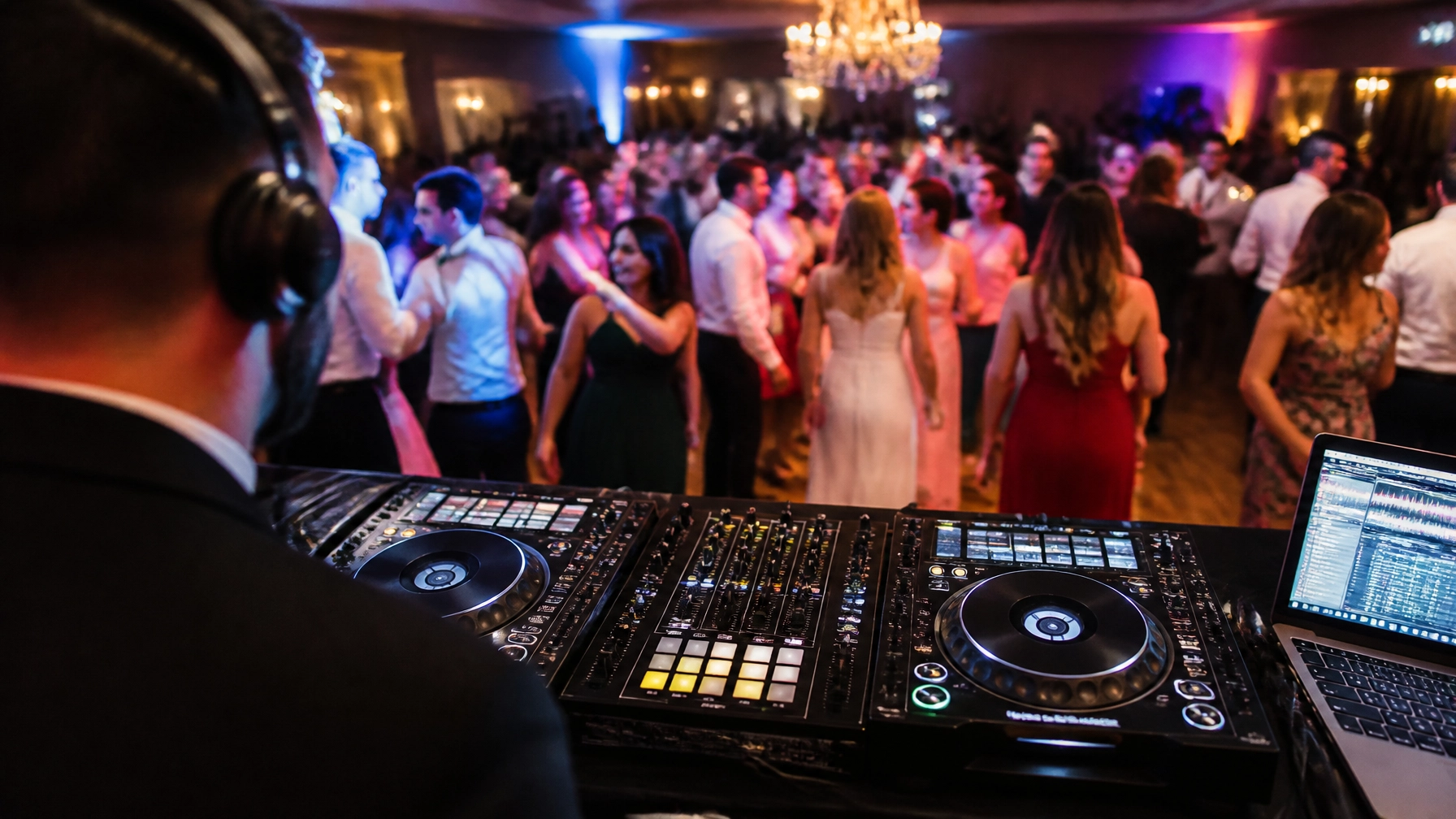
Planning a celebration is often an exercise in logistics that can feel like a full-time job. Between selecting the right venue and tasting the cake, there is a technical element that often goes unnoticed until it stops working: the flow of the event. As an industry professional who spends nearly every weekend in the trenches of live events, I can tell you that the secret to a polished, high-energy reception isn’t just a good playlist. It is the invisible management of timing, momentum, and transitions.
At Team Titus Events, we see how all the pieces of a wedding or corporate gathering fit together. Because we offer a full suite of services: from photography to music: we have a front-row seat to how a single delay in one area can ripple through the entire evening. Whether you are planning a wedding or a community gala, understanding the mechanics of reception flow will change how you view your professional DJ services.
How Photography Relies on Professional Flow
The first step in any successful event cycle often begins with the visual legacy. Professional photography is about more than just lighting and composition; it is about being in the right place at the right time. When you hire a photography team to capture your wedding, engagement, or family milestone, their success is tethered to the timeline of the day.
Realistic planning means acknowledging that photography needs dedicated windows. If the event flow is disjointed, the photographer is often forced to choose between capturing a candid moment of guests laughing and being ready for a scheduled grand entrance. When we coordinate professional photography alongside our entertainment services, the "flow" becomes a shared language. The DJ alerts the photographer five minutes before an announcement, ensuring that the lighting is set and the camera is aimed at the door before the music starts.
Without a managed flow, your photographer might still be at the back of the room during your first dance because the transition wasn't telegraphed. A seasoned insider knows that the best images come from moments that aren't rushed. By building a timeline that respects the time needed for family portraits or senior photos, you allow the artist to focus on the details rather than the clock.
The Role of the Officiant in Setting the Tone
The transition from a solemn ceremony to a high-energy reception is the most critical pivot of the day. This is where officiant services play a vital role. The person standing at the altar or the podium sets the emotional baseline for the event. A personal, meaningful ceremony delivered with warmth and confidence builds a sense of community among the guests.
However, the flow of the day doesn't stop when the officiant says, "You may kiss." In a professional setup, the officiant and the DJ work in tandem. The moment the ceremony concludes, the music must immediately pick up the energy, guiding guests toward the next phase of the celebration. If there is a "dead air" gap between the ceremony and the cocktail hour, the energy drops, and it takes twice as much effort to bring it back.
Practical event management involves a seamless handoff. We treat the conclusion of the ceremony as the "kickoff" for the entertainment. When the same team handles both the officiating and the music, we ensure that the mic levels are consistent and that the announcements leading guests to the reception are clear and directive.
Managing Guest Movement with a Photo Booth
As the reception gets underway, the flow isn't just about the main stage; it’s about the pockets of energy throughout the room. A photo booth experience is one of the best tools for managing guest movement during transitions. While the main dance floor might be the focus of the DJ, the photo booth serves as a secondary destination that keeps guests engaged during "buffer" times, such as the period when the wedding party is finishing portraits or when the buffet line is being cleared.
The best photo booth strategy is to place it in a location that is visible but doesn't obstruct the main traffic lanes. In a realistic scenario, guests will naturally migrate toward activities. If the photo booth is tucked away in a separate room, you lose that collective energy. When integrated into the flow, it provides instant memories for guests to take home without pulling them away from the celebration for too long.
We use the photo booth as a tool to keep the atmosphere light and social. It bridges the gap between the "seated" portions of the night (dinner and toasts) and the "active" portions (dancing). A well-timed announcement from the DJ can encourage guests to visit the booth during dinner lulls, ensuring that the line doesn't get too long once the dance floor opens.
Why Your Professional DJ is the Timekeeper of the Night
Now, let's talk about the heart of the matter: the DJ & entertainment services. Most people think a DJ just plays music. In reality, a professional DJ is the timekeeper, the MC, and the logistics manager of your reception.
How to Build a Realistic Timeline
An "ideal" timeline usually looks like a list of times: 6:00 PM Entrance, 6:15 PM Toasts, 6:30 PM Dinner. A "realistic" timeline, however, includes buffers. Professional DJs know that dinner rarely ends on the dot. Speeches that were supposed to be three minutes often turn into ten.
Choose a DJ who builds "flex segments" into the night. If the catering team is running ten minutes behind, the DJ should have a set of "high-social" background tracks ready to keep the room feeling intentional rather than waiting. Use active, directive verbs when discussing your timeline with your DJ. Tell them, "Move us to the cake cutting once the main course is cleared," rather than setting a hard time. This allows the DJ to read the room and adjust the flow based on real-time feedback.
The Best Way to Handle Announcements
A polished event requires clear, authoritative announcements. There is a massive difference between a DJ who mumbles, "Food's ready," and an MC who professionally invites guests to the buffet by table number while maintaining the ambiance.
The flow of a reception relies on guest expectations. When guests don't know what is happening next, they become restless. A professional DJ provides a roadmap for the evening. They announce the first dance five minutes before it happens so guests can find their seats. They coordinate with the venue staff before announcing the late-night snack so the food is actually ready when the announcement is made.
The Art of the Music "Wave"
Managing flow also applies to the dance floor. A seasoned pro doesn't play all the hits in the first thirty minutes. We build the energy in waves. You start with multi-generational tracks that get everyone from the kids to the grandparents moving. As the night progresses, you shift the energy to match the crowd that remains.
If the energy on the floor dips, the DJ must pivot immediately. This isn't just about changing the song; it's about changing the flow. Sometimes that means a slow song to reset the room, and other times it means a high-energy sing-along to pull people back from the bar.
The Power of the One-Stop Shop
The common thread through all of this is coordination. When you manage multiple vendors: a separate photographer, an independent DJ, a third-party photo booth company, and an outside officiant: the burden of coordination falls on you.
Choose a one-stop shop like Team Titus Events to simplify the process. Since 1985, we have operated as a family-run team that understands how these services overlap. When our team handles every detail, you aren't just getting a vendor; you’re getting a unified front. Our DJ knows exactly where our photographer is standing. Our officiant knows exactly how the DJ wants to transition the music.
Print this advice and keep it as a reminder: the best events are the ones where the hosts can actually enjoy themselves because they trust the team "in the trenches" to handle the flow. Build your celebration on a foundation of professional experience, and you will see the difference that a polished, practical approach makes.
Professional Reception Checklist
- Buffer Your Transitions: Add 10 minutes to your estimated dinner time to account for service delays.
- Coordinate with Catering: Ensure your DJ and the kitchen staff are synced on the timing of toasts.
- Set the Lighting: Your photographer and DJ should agree on when the house lights go down for dancing.
- Clear the Mic: Test all wireless microphones for toasts at least 30 minutes before guests enter the room.
- Prioritize the Flow: If a speech goes long, trust your DJ to tighten the next transition to get the dance floor open on time.
Leave a Reply